


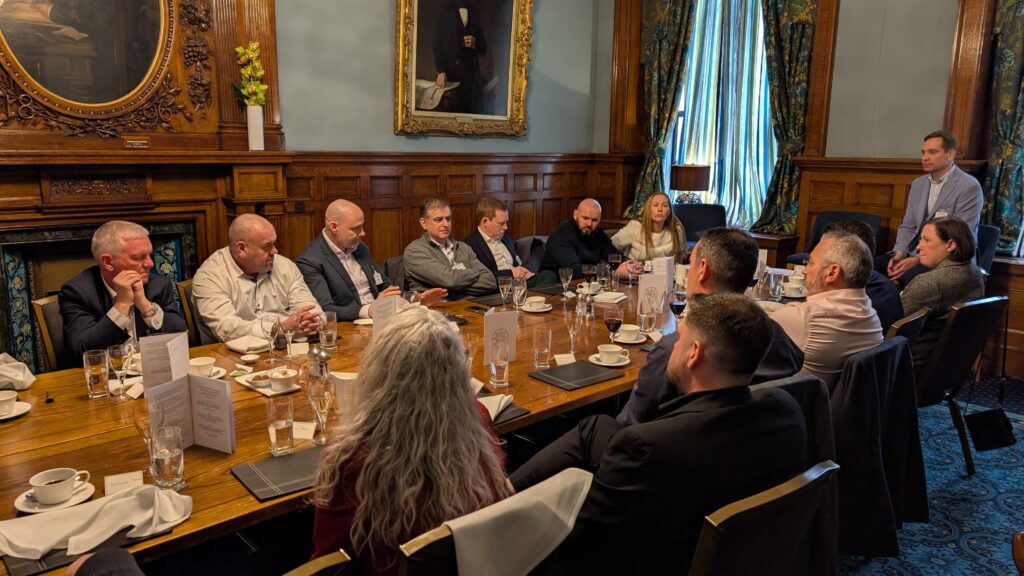
DataScope brought together construction health and safety experts to explore a shared challenge: how do we genuinely improve health and safety performance in an industry that already has strong regulation, policies and systems – but risk, rework and mixed behaviours can still persist?
Across both a panel Q&A and roundtable discussions, the room shared the same view: Better safety performance will not come from more layers of process or more data alone. It will come from better decisions, made earlier, supported by digital tools that work for the people right at the coalface.

Health & safety beyond compliance
The day started off with a panel session with our guest speakers, Brian Donnachie from Structure Tone, Martin Wilshire from Multiplex and Mark Mortell from Sir Robert McAlpine. The panel agreed that health and safety can no longer be treated as a standalone or compliance-led function. Instead, it must be embedded into everyday decision-making and the wider business strategy.
When digital health and safety tools are aligned to operational goals – such as reducing rework, improving planning accuracy and managing risk – they become a driver of productivity, influencing efficiency, programme certainty, workforce engagement and commercial success. Equally, the panel emphasised the quality of safety data plays a critical role in shaping future opportunities in an increasingly competitive market and confidence in long-term project delivery.
Designing for the workforce reality
The panellists challenged previous assumptions about what engages the workforce. Today’s site teams value simplicity, efficiency and their time. They want to get onto site quickly, do the job safely and get home on time.
Digital tools are already helping remove friction through online pre-inductions, shorter site inductions and more direct feedback channels. When technology respects time and context, trust and engagement will follow.
From data volume to data value
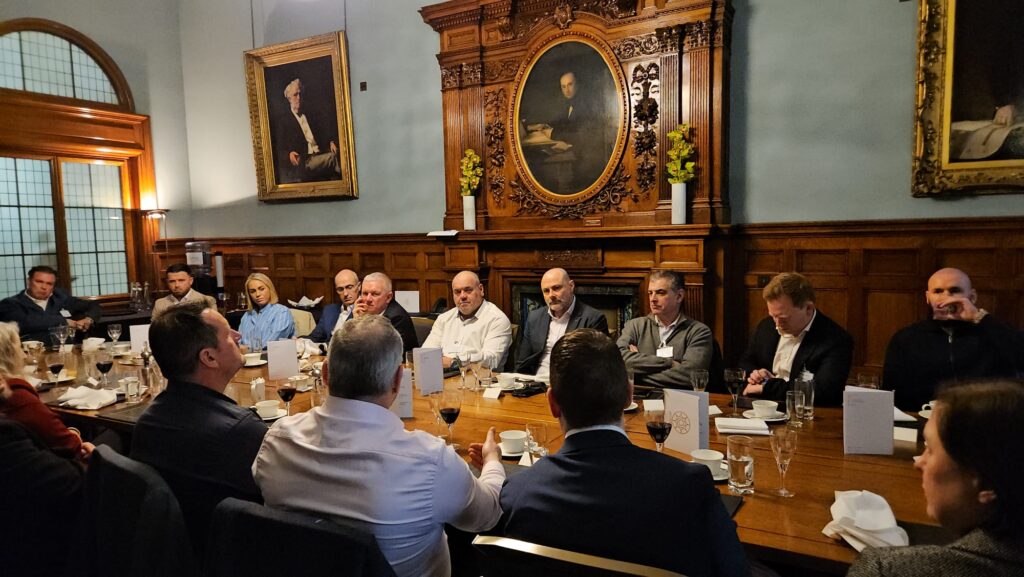
The event concluded with a round table discussion inviting everyone in the room to contribute to ongoing discussions that highlighted a persistent industry issue: plenty of data, but is there enough insight? Health and safety reporting is largely based on outcome-based indicators and broad observations, creating opportunities for more proactive prevention of serious harm.
The focus needs to continue shifting to high-quality, leading indicators aligned to critical risks- and, most importantly, to getting that insight to the point of work. Data that sits in dashboards or back-office reports was seen as static data unless it drives action on site.
Safer projects through better planning
Rework highlighted an important opportunity to strengthen safety outcomes. Improved planning, earlier design alignment, and more effective change control can help reduce frustration, fatigue, and ongoing exposure to high-risk activities over the life of a project and beyond project completion.
A recurring theme across previous insights and industry events was the importance of maintaining clear digital records and a robust “golden thread” of information—not only for compliance, but to support long-term safety and quality.
Collaboration, consistency and joined-up systems
There was strong agreement across the room on the need for better collaboration and knowledge-sharing, both across organisations and on individual sites. Too many disconnected systems create duplication and confusion, particularly for subcontractors moving between projects.
A single, joined-up platform was widely viewed as a key enabler: reducing duplication, improving data integrity, supporting better governance and enabling consistent ways of working. This reinforces the vital role DataScope plays as a central, workforce-first platform for integrated digital safety.
Looking ahead: intelligent support and education
AI and intelligent assistance were discussed as emerging opportunities, particularly in helping teams spot patterns, flag missed steps and support consistency. This emphasised technology should free people up to focus on safe, efficient delivery and not replace human judgement.
Education was also flagged as a longer-term challenge. Participants agreed that health and safety needs greater attention earlier in careers, including within construction and business education, so future leaders treat it as integral to operational excellence.
To conclude
The event reinforced a shared belief: construction health and safety can not fully move forward by doing more of the same. Progress lies in simplifying systems, aligning approaches and using digital tools to support people more than anything else.
When health and safety is workforce-first, risk-focused and business-aligned, digital technology becomes a powerful enabler of safer, more productive construction. Making data visible, actionable, and understandable at the point of work, combined with a joined-up, integrated platform is where meaningful change really starts.
Interested in attending future insights events? Click the button below to register your interest